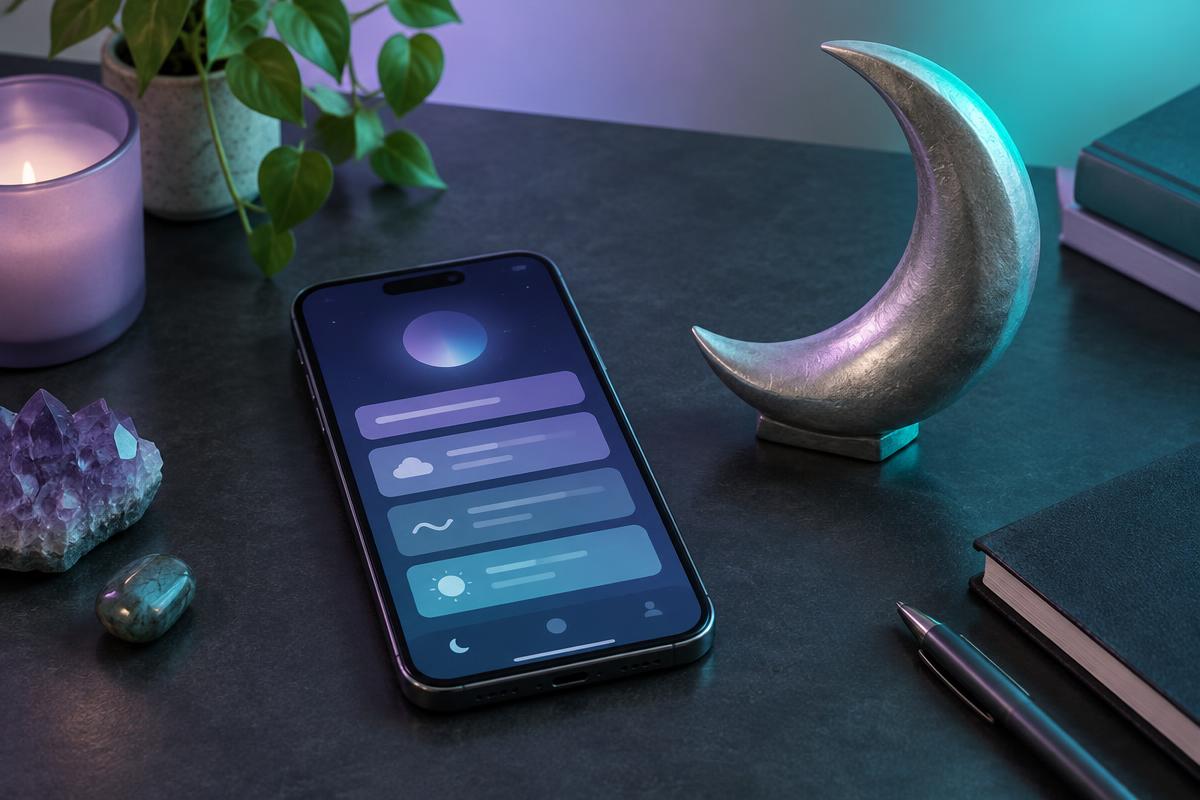
The short answer
Choose a dream interpretation app for easy recording, tentative and relevant reflections, understandable privacy practices, useful retrieval, and a sustainable price. Trial the workflow before subscribing, and never treat generated interpretations as predictions or established meanings.
Published by DreamDecode, a dream journaling and AI interpretation service. These guides explain our approach; they are not independent product rankings or medical advice.
Start with the job, not the symbol dictionary
The best dream interpretation app for you is the one that makes recording and revisiting dreams worthwhile without pretending to know what they definitively mean. Before comparing subscriptions, decide whether you mainly want a private journal, conversational reflection, a searchable record, or somewhere to discuss experiences. These are different jobs, and an impressive interpretation screen does not automatically solve all of them.
Write a short buying brief: “I want to capture a dream quickly, explore two possible connections, and find it again next month.” Add your preferred monthly budget and one privacy requirement. This turns a vague search into a practical test. If an app cannot meet that brief during a trial, more elaborate features are unlikely to compensate. Choose for the routine you will actually maintain, not the routine advertised in a demonstration.
Understand what an interpretation can reasonably offer
Dream interpretation is not a validated method for decoding every image into a fixed message. Cleveland Clinic notes that there is no consistent, scientifically proven theory linking particular dream content to its meaning. An app should therefore offer possibilities rather than announce discoveries about your unconscious, relationships, or future. 1
Sleep Foundation also describes substantial uncertainty about why we dream and what individual dreams might mean. That uncertainty does not prevent personal reflection; it changes the standard by which you judge the tool. Look for questions that help you examine your own associations, not claims that a symbol proves something. 2
A useful result might ask whether a dream's atmosphere resembles something in your waking life. A poor result insists that missing a train means you will lose an opportunity. The first invites judgment; the second supplies unsupported certainty. Treat confident predictions as a reason to reject a product, even if the writing sounds compassionate.
Test capture before testing cleverness
A journal succeeds only when you can record something while the memory is available. Open the app in the browser and try entering a deliberately short account. Check whether the essential fields make sense without lengthy preparation. You should be able to distinguish the events you remember from background information you add later, even if that distinction requires a simple sentence in the description.
For a fictional trial entry, write: “I was waiting outside a locked classroom. I felt impatient, not frightened. I do not remember who was inside.” Give it a plain title and record the mood you actually described. Do not embellish the story merely to make the AI response more interesting. You are testing the interface and its handling of uncertainty, not trying to impress it.
Next, revisit the saved entry. Is the original easy to locate and read? Can you understand your own shorthand? A beautiful analysis is less valuable if the underlying journal becomes an unsearchable pile of fragments.
Compare reflection quality with a simple rubric
Use the same fictional account when comparing apps, keeping identifying information out of the test. Assess whether each result accurately reflects the dream, distinguishes interpretation from fact, offers more than one plausible angle, and gives you a question worth considering. You do not need an expert score for symbolic sophistication. You need a dependable way to notice whether the response respects the material you supplied.
Pay special attention to invented details. If the classroom becomes an examination hall, or impatience becomes terror, the response has drifted from the entry. A model may produce fluent prose around those additions, but fluency does not make them part of your memory. Prefer tools that leave room for correction and disagreement rather than pushing a single persuasive narrative.
Finally, ask whether the result ends somewhere practical. “What did waiting feel like?” is easier to use than several paragraphs declaring profound transformation. Useful reflection can be modest, brief, and unfinished.
Inspect privacy at the account level
Dream journals can include names, conflict, intimacy, and information about other people. Before creating an account, read the service's privacy information and look for clear explanations of storage, access, retention, deletion, and any processing by outside providers. If those details are unclear, ask support specific questions before entering sensitive material. A general promise of privacy is not a substitute for understandable handling practices.
Keep separate questions separate. A private journal is about the intended audience for an entry; cloud storage describes where records are held; encryption concerns technical protection. None of those phrases alone establishes end-to-end encryption or excludes every form of service access. Do not infer technical guarantees from a padlock icon or reassuring marketing language.
For your first week, consider replacing real names with neutral descriptions and omitting workplaces, addresses, or identifying details. That is a practical reduction in what you disclose, not a guarantee of anonymity. Also consider who can access your browser account or shared device.
Look for retrieval tools you will genuinely use
Search and filtering matter more as the journal grows. Test a search using an ordinary word from your fictional entry, then try the available category filter. Think about how you naturally remember dreams: a setting, an emotion, a person, or an unusual object. A retrieval system is useful when it matches that habit without requiring you to remember an elaborate naming convention.
Use descriptive titles such as “Waiting outside the classroom” rather than “Strange dream number seven.” Keep categories broad enough that you can apply them consistently. If the app offers fixed categories, work within those choices instead of assuming you can create custom tags. Extra organizational complexity can make a journal harder to maintain rather than easier to understand.
Analytics deserve a different test: do they summarize your records clearly? A chart of recorded moods can describe what you entered. It cannot establish why a dream happened, measure your unconscious, or prove that an interpretation was right.
Check portability before the journal becomes valuable
An export option is easy to overlook when you have only one entry. It becomes important after months of writing. Look for the available export format and decide whether you can realistically use it. A structured JSON export can support keeping a separate copy or moving information into another workflow, but it is not the same as a ready-made printed journal or a guaranteed import into another service.
If you test an export, inspect the file for the fields you care about instead of assuming every screen element is included. Check whether your original descriptions are present and legible. Store any downloaded copy somewhere appropriate for sensitive writing, especially on a shared computer. Exporting creates another copy to manage; it does not automatically remove the cloud copy.
Ask separately about account deletion and retention if those are important to your purchase. Portability, deletion, and backup are related concerns, but one feature does not establish the others.
Calculate subscription value rather than chasing features
Compare the actual billing commitment with the activity you expect. A subscription can be poor value even when the individual interpretations are engaging, especially if you only record one dream occasionally. Conversely, someone who regularly revisits entries may value organization and reflection prompts more than long generated explanations. There is no universal number of dreams that makes a plan worthwhile.
At KES 1,000 per month, four useful sessions would average KES 250 each; ten would average KES 100. These are budgeting examples, not promised usage limits or product entitlements. Use your likely routine, not an optimistic daily streak, when making the calculation. Also consider the effort required to review results thoughtfully rather than collecting them unread.
Before paying, identify the billing interval, automatic renewal arrangement, and how to obtain help with billing. If the cancellation process is not clear, contact support first. Do not assume that an export, account logout, or lack of use stops a subscription.
Where DreamDecode fits in the shortlist
DreamDecode is a browser app with accounts and a private cloud journal. Entries include a title, description, mood, and category. Its feature set includes AI interpretations, reflection prompts, search, category filtering, JSON export, analytics, opt-in community features, and support. That makes it relevant if your buying brief combines writing, reviewing, and organizing rather than asking only for a one-off symbol explanation.
The first interpretation is free. Pro costs KES 1,000 per month with automatic renewal through Paystack. Use the free first interpretation to evaluate the tone and usefulness of a result before deciding whether the recurring cost suits you. It is an opportunity to inspect the experience, not evidence that any interpretation is objectively accurate.
Keep your evaluation tied to those stated capabilities. Do not assume a native mobile app, offline access, voice notes, reminders, custom tags, or end-to-end encryption. For unresolved questions about data handling or subscription management, use support rather than filling gaps with assumptions.
Keep community participation separate from private reflection
Community can be appealing when you want to compare perspectives, but it introduces a different decision from keeping a journal. In DreamDecode, community participation is opt-in. Decide whether you want outside responses at all before sharing, and inspect the sharing flow so that you understand what you are choosing to disclose. A private entry does not need a public audience to be useful.
If you choose to participate, prepare a shortened version without names or identifying context. Remember that other people's suggestions are interpretations, not evidence about your life. Agreement from several readers does not turn a symbolic claim into a fact. You remain free to ignore an explanation that feels intrusive, stereotyped, or disconnected from your own experience.
Also consider your attention budget. If discussion makes you repeatedly seek reassurance about a frightening image, stepping back may be more helpful than gathering additional opinions. A good purchasing decision includes boundaries around how you will use the service.
Run a small, deliberate buying trial
Plan three sessions rather than judging the product by one dramatic response. First, test capture with your fictional entry. Second, use a brief real entry only if you are comfortable with the privacy information. Third, revisit both and test retrieval. Write down friction points immediately: unclear labels, difficulty finding an entry, or an interpretation that overlooked the emotion you supplied.
Keep a short decision sheet with four headings: recording, reflection, privacy clarity, and cost. Under each, note one concrete observation. “Found my entry using a remembered word” is stronger evidence than “felt advanced.” “The response admitted uncertainty” is more useful than “sounded intelligent.” This approach makes comparisons fair without pretending you have measured scientific accuracy.
At the end, decide among subscribing, continuing with a simpler journal, or postponing the purchase. Not buying is a legitimate result. The point of the trial is to discover fit, not to justify a payment you already feel committed to making.
Make the final choice with clear boundaries
Choose an app when its everyday workflow is easy, its interpretations remain tentative, its privacy information is understandable, and its recurring cost fits your budget. Reject products that promise universal meanings, predict events, infer diagnoses, or pressure you to treat every dream as urgent. Those claims are not necessary for a useful reflective journal.
After choosing, set a light routine: record what you remember, read one interpretation, answer one worthwhile question, and move on. Revisit entries when you have a reason, not because a dashboard implies that every pattern needs explanation. Your own associations and waking circumstances should remain more important than the software's preferred story.
If dreams are repeatedly distressing or disrupting sleep, consider discussing the problem with a qualified healthcare professional rather than treating an app as clinical care. A buyer's guide can help you select a writing tool; it cannot establish what an individual dream means or replace individualized professional advice.
Common questions
What should I prioritize in a dream interpretation app?
Start with easy recording, useful retrieval, clear privacy information, and interpretations that acknowledge uncertainty. Then compare price and export options. The best feature list is not necessarily the best daily workflow for you.
Is a paid interpretation more accurate than a free one?
Price does not establish accuracy. Judge whether the response stays faithful to your entry and offers sensible questions without claiming certainty. Neither a subscription nor polished prose validates a particular symbolic explanation.
What does DreamDecode cost?
DreamDecode offers the first interpretation free. Pro is KES 1,000 per month and renews automatically through Paystack. Clarify any unresolved subscription-management questions with support before paying.
Can I keep using a plain journal instead?
Yes. A plain journal may be sufficient if you mainly want to preserve memories and write your own reflections. An app becomes worth considering when its organization, prompts, and interpretation workflow add enough practical value for you.
Sources and further reading
Scientific sources explain the limits of dream interpretation; they do not endorse DreamDecode or validate AI-generated meanings.
- Cleveland Clinic: Dreams: What They Are and What They Mean ↗
- Sleep Foundation: Dream Interpretation ↗
Your next chapter starts with a dream
Keep a personal dream journal and explore your first AI interpretation free.